2026-01-01 08:00:27
Enertec Blade and 135Ah leisure applications
Marine power is no longer only about starting an engine. Modern boats, leisure craft, working vessels and coastal facilities rely on batteries for electronics, lighting, pumps, sound systems, navigation, communications, house systems and backup power. The battery has become part of the full onboard experience.
That is why compact high-capacity lithium matters.
For boat dealerships, marine distributors, independent workshops, marine electricians, boat chandlers, custom builders, commercial fishing operators, charter fleets, watersports businesses, marinas and yacht clubs, the conversation is shifting. Customers still want reliable starts, but they also want usable energy, lighter installations, better monitoring and fewer battery-related interruptions.
The Enertec Blade battery and compact 135Ah leisure battery options give the marine trade a stronger way to talk about modern power. They help move the sale away from “what fits in the box?” and towards a better question: “what does this boat need to power, for how long and under what conditions?”
Why compact lithium matters in marine and leisure applications
Space is always valuable on a boat. Every battery installation has to work around compartments, cable routes, weight distribution, ventilation, access, mounting and safety. Traditional lead-acid batteries can still be suitable for many applications, but lithium brings a different value proposition where the system is compatible.
Compact lithium options can give marine businesses more usable energy in a smaller or lighter package. That is important for boats where battery space is limited, payload matters or customers want longer runtime from electronics and onboard systems.
For the trade, the benefit is commercial as much as technical. A better battery recommendation can reduce comebacks, support higher-value fitments and help customers understand why lithium is not just an upgrade label. It is an application-led decision.
Typical use cases for the Enertec Blade battery
The Enertec Blade battery is relevant where compact format, lithium performance and system monitoring are valuable. It can be considered for marine and leisure environments where the installation is designed correctly and the battery specification matches the application.
Common use cases include:
-
Boat house systems
-
Auxiliary power for electronics
-
Overnight leisure power
-
Caravan and trailer applications
-
Overlanding support systems
-
Small inverter support
-
Marine leisure upgrades
-
Backup power for selected onboard or shore-adjacent equipment
For marine electricians and fitment specialists, the compact profile of the Enertec Blade battery can be useful when space is tight. For chandlers and retailers, it creates a strong product story around modern battery technology. For boat builders and refurbishers, it opens up cleaner installation conversations where space, weight and capacity must be planned together.
Trade teams can explore relevant options in Enertec’s marine and leisure battery range.
Where 135Ah leisure applications fit
A 135Ah lithium leisure battery option can be an important middle-ground solution for customers who need more capacity than smaller batteries provide but do not necessarily need a large multi-battery bank.
In real use, 135Ah-class applications can suit customers who want to power fridges, lights, pumps, electronics, charging points or small inverter loads for leisure use. It can also appeal to service providers that need a practical, high-capacity option for boats, mobile setups, custom builds and selected commercial support applications.
The key is not the amp-hour figure alone. It is how that capacity matches the load, runtime requirement, charging system and installation environment.
A customer who runs a few lights and occasional electronics has a different need from a charter operator running systems daily. A weekend leisure boat has a different profile from a working boat that cannot afford downtime. This is why correct specification remains essential.
Common issues in marine battery upgrades
Many marine battery complaints begin before the battery is installed. The wrong battery is selected, the charging system is not checked or the customer expects lithium to solve a problem caused by wiring, corrosion or poor system design.
Common issues include:
-
Incorrect battery selection for starting versus house power
-
Poorly matched chargers
-
Undersized cabling
-
Weak terminals or poor connections
-
Corrosion from harsh marine environments
-
Battery systems installed without proper protection
-
Customers expecting more runtime than the load calculation supports
-
No clear replacement or maintenance plan
For workshops and marine electricians, these issues create avoidable callouts. For boat dealers, they can damage handover confidence. For commercial operators, they can interrupt income.
A lithium upgrade must be sold with system thinking. The battery matters, but so do charging, wiring, protection, installation quality and customer education.
Battery technologies explained
Lead-acid marine and leisure batteries
Lead-acid marine and leisure batteries remain suitable for many standard applications where cost, availability and familiar replacement are important. They can be a practical fit for customers with straightforward requirements.
AGM and Gel options
AGM and Gel batteries can support selected deep-cycle or standby applications where sealed construction, lower maintenance and application suitability are required. They still need correct charging and should not be treated as universal replacements.
Lithium-ion and LiFePO4 batteries
Lithium-ion, especially LiFePO4, brings strong advantages in suitable systems. These can include lighter weight, higher usable capacity, longer cycle life, faster charging potential and better monitoring where the battery includes smart features.
However, lithium should be correctly matched. The charger, battery management system, cable sizing, protection components and application must work together. If the installation is wrong, even a premium battery can disappoint.
How to choose the right lithium battery
A professional recommendation starts with the right questions.
Before supplying an Enertec Blade battery or high-capacity lithium leisure battery, trade teams should ask:
-
What is the battery powering?
-
Is it for starting, house power or auxiliary support?
-
What is the total load?
-
How many hours of runtime are required?
-
What charger or charging system is installed?
-
Is there solar, shore power or engine charging?
-
Where will the battery be mounted?
-
Is the installation exposed to heat, vibration, moisture or salt air?
-
Does the customer need Bluetooth monitoring?
-
Is this a single boat or a fleet?
-
Will the application need future expansion?
These questions help dealers and installers move away from guesswork. They also make the customer feel guided, not simply sold to.
Signs the current battery system needs review
A customer may ask for a replacement battery, but the better opportunity may be a full system review.
Warning signs include reduced runtime, electronics dropping out, pumps or lights weakening, chargers showing errors, batteries becoming hot, repeated failures on the same vessel, corrosion around terminals, slow charging, unexpected inverter shutdowns or inconsistent performance after storage.
For marinas, charter operators and working boats, repeat issues should trigger a planned replacement approach. If several boats in the same fleet show the same problem, the issue may be poor standardisation rather than one weak battery.
Product positioning: Good, better and best thinking
Enertec gives trade customers a stronger way to frame the marine and leisure battery category.
A practical lead-acid option may suit simpler needs. AGM or Gel may be suitable for selected sealed or deep-cycle requirements. Lithium, including Enertec Blade and other high-capacity options, can sit as the higher-value solution where weight, usable capacity, cycle life and monitoring matter.
This good, better and best structure helps retailers, fitment centres and dealers sell with confidence. The conversation becomes less about the cheapest price and more about correct fit.
That is exactly how premium marine battery supply should work.
CTEK chargers and charging compatibility
Charging compatibility is one of the biggest factors in lithium battery performance. A lithium battery must be paired with the correct charging system, whether the setup uses shore power, solar, alternator charging, DC-DC charging or a dedicated onboard charger.
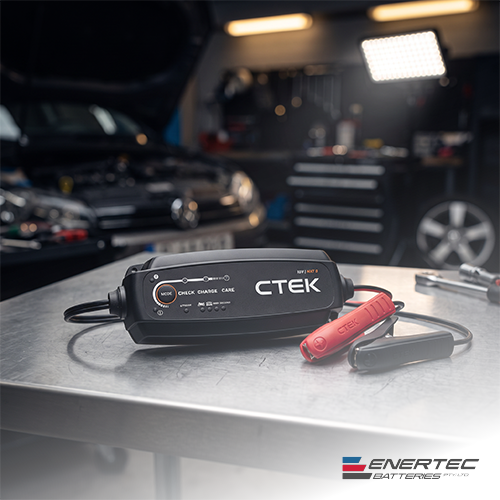
CTEK chargers can be part of the support conversation where compatible marine charging or maintenance is required. Marine dealers and service centres should always check the battery chemistry, charger profile and system design before recommending a charging solution.
Correct charging protects the battery, the customer and the trade relationship.
Why choose Enertec as your marine and leisure battery supplier
Marine customers need more than stock on a shelf. They need correct specification, reliable supply, product support and a partner that understands how harsh marine and leisure environments can be.
Enertec supports marine dealerships, workshops, electricians, chandlers, boat builders, commercial operators and coastal facilities with application-led battery supply. That support helps trade businesses build stronger recommendations, manage stock better and guide customers through the shift toward lithium.
For project support, product matching or supply enquiries, contact Enertec. To grow your marine and leisure battery category with a trusted supplier, become an Enertec dealer.
FAQs about Enertec Blade and lithium leisure batteries
Is the Enertec Blade battery suitable for every boat?
No. It must be matched to the application, charging system, installation space and electrical requirements.
What makes lithium useful in marine leisure applications?
Lithium can offer lighter weight, strong usable capacity and longer service potential in compatible systems.
Is a 135Ah lithium battery enough for a leisure setup?
It depends on the load and runtime required. The correct recommendation should be based on a load calculation, not only the amp-hour rating.
Can lithium replace lead-acid directly?
Not always. The charger, wiring, protection and battery management requirements must be checked before replacement.
Compact lithium is a smarter marine power conversation
The Enertec Blade battery and compact 135Ah lithium leisure options help the marine trade offer more than a replacement battery. They support a stronger conversation around space, capacity, runtime, monitoring and correct system design.
For boat dealerships, marine workshops, electricians, chandlers, builders, commercial operators, charter fleets and coastal facilities, the opportunity is clear. Customers need reliable power, but they also need the right guidance.
Enertec gives trade businesses the range, support and application focus needed to sell lithium with confidence.
Help your customers power smarter, fit cleaner and reduce battery-related downtime with Enertec marine and leisure battery solutions.