2026-03-25 16:56:21
The Ultimate Dealer’s Guide to Car Batteries
A Dealer-Focused Guide to Automotive Battery Selection, Performance & Supply
Introduction
Car batteries are one of the most frequently replaced components in the automotive sector, yet they are also one of the most misunderstood.
For workshops, battery centres, fleet operators and parts resellers, automotive batteries represent:
● Consistent turnover
● Emergency purchase behaviour
● Cross-sell opportunities (testing, charging, diagnostics)
● Long-term customer retention
Every passenger vehicle, light commercial vehicle and fleet car depends on a reliable starting battery. And as vehicles become more electronically complex, with start-stop systems, infotainment, onboard computers and telematics, battery selection is no longer a simple “fit and start” decision.
Correct battery selection directly affects:
● Customer satisfaction
● Comebacks and warranty claims
● Workshop credibility
● Fleet uptime
Understanding the technologies, applications and supply considerations behind automotive batteries is therefore commercially critical.
Typical Use Cases
Automotive batteries are used across multiple vehicle categories and operating environments:
Passenger Vehicles
● Daily commuting
● School runs
● Urban stop-start traffic
● Moderate electrical demand
Light Commercial Vehicles (LCVs)
● Delivery fleets
● Service vehicles
● Tradesmen vehicles
● Higher usage cycles
Fleet & Corporate Vehicles
● Pool cars
● Rental fleets
● Logistics operations
● Telematics and tracking systems
High Electrical Demand Vehicles
● Luxury vehicles
● Vehicles with aftermarket sound systems
● Start-stop equipped vehicles
● Vehicles with auxiliary systems
Operating Environments
Automotive batteries in South Africa must withstand:
● High ambient temperatures
● Urban congestion
● Long highway drives
● Infrequent use (vehicles standing for extended periods)
Usage intensity varies significantly. A battery in a private vehicle may cycle lightly, while a fleet vehicle operating daily may experience continuous charge-discharge cycles.
Understanding the duty cycle is key to selecting the correct battery technology.
Common Issues in Car Battery Applications
For dealers and workshops, the most common automotive battery complaints include:
Premature Failure
Often caused by:
● Incorrect battery sizing / specification
● Undersized capacity
● Poor charging systems
● Heat exposure
Customer Comebacks
● The vehicle struggles to start
● Dashboard warnings
● Intermittent electrical faults
Downtime for Fleets
● Missed deliveries
● Delayed operations
● Increased operating costs
Incorrect Installation
● Failure to reset battery management systems
● Incorrect terminal fitting
● No load testing before replacement
INCORRECT BATTERY CHOICES
Modern vehicles with start-stop systems require specific battery types. Installing a conventional flooded battery where AGM is required can significantly reduce lifespan.
These issues highlight why battery selection must move beyond price and into application suitability.
Car Battery Technologies Explained
Selecting the correct battery begins with understanding the core technologies.
1. Flooded Lead-Acid (Sealed Maintenance Free – Calcium technology)
Best suited for:
● Standard passenger vehicles
● Older vehicle models
● Moderate electrical loads
Advantages:
● Cost-effective
● Widely available
● Proven technology
Limitations:
● Lower cycle life
● Not suited to start-stop systems
● More sensitive to deep discharge
EFB (Enhanced Flooded Battery)
Best suited for:
● Entry-level start-stop vehicles
Advantages:
● Improved durability over standard flooded
● Better suited to partial state-of-charge operation
● Longer cycle life than standard Lead Acid batteries
2. AGM (Absorbent Glass Mat)
Best suited for:
● Start-stop vehicles
● High electrical demand vehicles
● Fleet applications
Advantages:
· Higher Cranking capability
· Higher cycle life
● Better vibration resistance
● Faster recharge capability
● Handles deeper discharges
● Longer service life
Limitations:
● Higher upfront cost
● Requires compatible charging systems
3. Technology Matters
Battery choice should be based on:
● Vehicle specification
● Electrical load demand
● Start-stop compatibility
● Usage frequency
The cheapest battery is rarely the correct battery if the application demands higher performance.
How to Choose the Right Car Battery
For dealers and workshops, correct qualification includes:
✔ Voltage
Most passenger vehicles: 12V
✔ Cold Cranking Amps (CCA)
Must meet or exceed OEM specification.
Under-specifying CCA leads to starting issues and early failure.
✔ Capacity (Ah Rating)
Important for vehicles with higher electrical draw.
✔ Vehicle Type
● Does it have start-stop?
● Is it fitted with additional electronics?
● Is it part of a fleet?
✔ Operating Environment
● High-heat region?
● Vehicle frequently idle?
● Long or short driving cycles?
✔ Charging System Compatibility
Modern vehicles require battery registration in some cases. Matching battery type to alternator profile is critical.
Dealers who qualify properly reduce warranty claims and increase customer trust.
Signs a Car Battery Is Failing
Recognising failure triggers helps dealers start proactive replacement conversations.
Warning Signs Include:
● Slow engine crank
● Clicking sound when starting
● Dimming headlights
● Electrical system warnings
● Voltage dropping under load
● Swollen battery casing
For fleets, preventive replacement before failure reduces operational risk.
Routine battery testing during service intervals provides upsell opportunities while protecting the customer from breakdown situations.
Regular charging utilizing Ctek Intelligent battery chargers – (even on fully charged batteries) will enhance the life of the battery. Ctek have a built in “ recond mode “ – recondition mode which will effectively increase battery life on sealed flooded batteries and EFB batteries.
This mode MUST NOT be used on AGM or GEL batteries
Car Battery Brands Available Through Enertec
Enertec supplies a focused automotive battery portfolio designed to cover mainstream passenger vehicles, higher-demand applications and brand-conscious markets. Each brand serves a distinct role within the automotive category.
Enertec Automotive Batteries
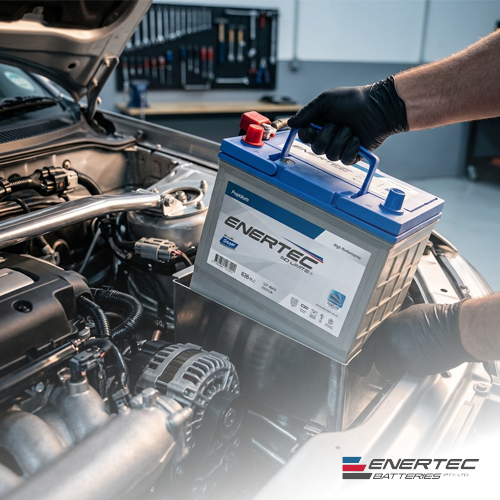
Enertec automotive batteries are designed to deliver reliable starting power for everyday passenger vehicles and light commercial applications. Built for South African operating conditions, they offer a strong balance between performance, durability and value.
Why Choose Enertec Car Batteries
● Consistent cold cranking performance
● Built for high-heat environments
● Reliable quality control
● Competitive warranty support
● Strong price-to-performance positioning
● Backed by Enertec’s technical and after-sales support
● 30 month warranty on Enertec Silver ( car batteries only )
Best Used For
● Standard passenger vehicles
● Daily commuting vehicles
● Independent workshop replacements
● Fleet vehicles with moderate electrical demand
● High-turnover retail environments
Enertec-branded batteries are ideal for dealers looking for dependable performance with solid margins and structured local support.
Energizer Automotive Batteries
Energizer automotive batteries combine global brand recognition with advanced battery technology. Designed for modern vehicles, they support higher electrical loads and enhanced performance requirements.
Why Choose Energizer Car Batteries
● Internationally recognised brand
● Strong brand trust at consumer level
● Enhanced performance options available (including AGM variants where applicable)
● Reliable starting power in demanding conditions
● Designed to support modern vehicle electronics
● 30 month warranty on car batteries sold out of Batterypower Zone.
Best Used For
● Brand-conscious customers
● Start-stop vehicles (AGM variants)
● Vehicles with higher onboard electronics
● Premium passenger vehicles
● Corporate and fleet specifications requiring recognised brands
Energizer provides dealers with a premium positioning option for customers who prioritise brand reputation alongside performance.
CTEK Car Battery Chargers
Battery performance is directly influenced by charging quality.
Incorrect charging leads to:
● Sulphation
● Reduced capacity
● Shortened lifespan
● Increased warranty claims
CTEK car battery chargers are designed to support:
● Flooded lead-acid batteries
● AGM batteries – car and motorcycle
● Lithium Ion Phosphate batteries – marine and leisure and motorcycle
● Maintenance charging for vehicles in storage
● Workshop diagnostic environments
Why Charger Compatibility Matters
● Different technology batteries ( flooded, AGM, GEL, Lithium ) require specific charging profiles
● Maintenance charging extends battery life
● Fleet vehicles standing idle benefit from intelligent charging
For workshops, offering professional charging solutions reduces comebacks and enhances credibility.
For fleets, structured battery maintenance reduces the total cost of ownership.
Why Choose Enertec as Your Car Battery Supplier
The battery itself matters, but supply reliability matters more.
Enertec differentiates itself through:
✔ National Stock Availability
Reliable inventory levels across automotive ranges.
✔ Dealer-Focused Supply Model
Enertec supplies to dealers, workshops and businesses, not direct retail competition.
✔ Technical Support
Guidance on battery selection and application suitability.
✔ Efficient Distribution
Structured logistics support to reduce downtime.
✔ Warranty & After-Sales Support
Clear processes that protect dealer relationships.
✔ Access to Complementary Products
● CTEK chargers
● Booster units
● Battery accessories
Enertec’s role is not simply to sell batteries, but to support dealers in building sustainable, profitable automotive battery businesses.
FAQs
What is the difference between AGM and standard car batteries?
AGM batteries offer higher cycle life, better performance in start-stop vehicles and improved vibration resistance and quicker re charge time when compared to conventional flooded batteries.
Can I replace an AGM battery with a standard battery?
No. Vehicles designed for AGM require AGM. Downgrading can cause performance issues and reduced lifespan.
How long should a car battery last?
Typically 2–4 years depending on usage, climate and charging conditions.
Does heat affect battery lifespan?
Yes. High temperatures accelerate internal chemical reactions and can shorten battery life.
Should batteries be tested before replacement?
Yes. Load testing and voltage testing confirm failure and improve customer transparency.
Are chargers necessary for automotive batteries?
For vehicles that stand idle or operate in fleet environments, intelligent charging significantly extends lifespan. One may enhance the life of a battery by regularly charging even if the battery is fully charged by using an intelligent Ctek battery charger
Is it safe to install a higher Ah battery than the original specification?
Yes, provided the battery physically fits and the charging system supports it. A higher Ah rating can benefit vehicles with additional electrical loads.
Do start-stop vehicles always require AGM batteries?
Not always. Some entry-level start-stop systems use EFB batteries. Always confirm the vehicle specification before replacement.
What shortens a car’s battery lifespan the most?
Heat exposure, frequent short trips, deep discharges, incorrect charging, and poor-quality installation are the primary causes of premature failure.
How does frequent short-distance driving affect a battery?
Short trips prevent the alternator from fully recharging the battery, leading to partial state-of-charge operation and sulphation.
Can a battery recover after being deeply discharged?
Sometimes, with proper intelligent charging. However, repeated deep discharge significantly reduces lifespan, especially in conventional flooded batteries.
Why do fleet vehicles often experience shorter battery life?
Fleet vehicles may operate daily with telematics, tracking systems and auxiliary loads, increasing cycling and stress on the battery. Fairly The onboard charging system might not be suffient to replace the capacity removed from the battery on a daily basis. It is always good practice a re charge a battery fairly regularly even if is fully charged. This will enhance the lifespan of the battery
Does vibration affect battery performance?
Yes. Vibration is one the highest causes of premature battery failure. Poor mounting or harsh operating conditions can reduce lifespan. AGM batteries offer improved vibration resistance.
Should the charging system always be tested during battery replacement?
Yes. Replacing a battery without checking the charging system can result in repeated failures.
Should fleet vehicles use higher-spec batteries?
In many cases, yes. Vehicles with telematics and auxiliary systems benefit from higher capacity or AGM technology.
Can smart chargers extend battery lifespan?
Yes. Intelligent chargers reduce sulphation, maintain optimal charge levels and support battery recovery where possible. It is good practice to charge a battery regularly even if it is fully charged using a Ctek battery charger. This will definitely enhance the battery life.
Conclusion
Automotive batteries remain a high-volume, high-frequency product category, but complexity is increasing.
Dealers who understand:
Application → Problems → Technology → Qualification → Correct Product → Reliable Supplier
…will reduce comebacks, protect margins and build long-term customer loyalty.
Enertec supports automotive dealers not just with stock,
but with structure, technical insight and supply reliability.