2026-01-01 08:00:33
Battery fitment for new Asian vehicle models
New Asian vehicle models are changing the way battery fitment needs to be handled at the counter, in the workshop and across parts distribution. The days of matching a battery by size alone are over.
For battery specialists, fitment centres, tyre chains, service networks, auto spares retailers, OEM dealerships, dealer groups and auto electrical workshops, automotive battery fitment accuracy has become a reputation issue. One wrong recommendation can lead to a no-start complaint, a warning light, poor battery life, warranty pressure or a customer who loses confidence in the installer.
Modern vehicles are more sensitive to battery specification than many customers realise. Battery size still matters, but so does technology, capacity, cold cranking performance, terminal layout, hold-down fit, charging system compatibility and vehicle application. This is especially important as new Asian models continue to bring different body styles, higher electrical loads, start-stop variants, compact battery spaces and more specification variation into the South African aftermarket.
Correct fitment is not just technical. It is commercial.
Why application accuracy matters more than ever
A customer usually asks for “a battery for my car”. A professional trade business needs to hear a deeper question: what exact vehicle, engine, trim, usage pattern and battery technology does this application require?
Application accuracy matters because many new vehicles no longer tolerate a close-enough fit. If the wrong battery technology is fitted, the vehicle may start at first but fail sooner than expected. If the terminal layout is wrong, fitment becomes unsafe or impractical. If the capacity is too low, the vehicle may struggle under load. If the charging profile does not match the battery technology, the customer may return with repeat problems.
For dealers and workshops, this creates two risks. The first is customer dissatisfaction. The second is margin loss through unnecessary returns, repeat testing and time spent defending a poor fitment.
Getting automotive battery fitment right the first time protects the customer, the vehicle and the business.
What makes newer Asian vehicle models more complex?
Asian vehicle ranges are broad. The same model name can appear across different engine options, model years, trim levels and technology packs. A standard petrol derivative may not need the same battery as a higher-spec version with more electronics. A vehicle used mainly for short urban trips may also place different strain on the battery than one used daily for longer routes.
Newer models may include features such as stop-start systems, advanced infotainment, electric steering support, driver assistance systems, security modules and higher accessory loads. These features make the battery part of the vehicle’s operating system, not just a starting component.
That is why battery teams must avoid assumptions based on badge, shape or previous-generation fitment.
The hidden cost of wrong battery fitment
Incorrect battery fitment rarely fails neatly. It often creates messy symptoms that customers struggle to explain.
A customer may report slower starting, warning lights, repeated flat batteries, weak performance after short trips or accessories behaving strangely. The battery may be blamed when the real issue is that the wrong technology was fitted in the first place.
For workshops, this can lead to extra diagnostics. For retailers, it can lead to warranty disputes. For parts distributors, it can create unnecessary returns and stock frustration. For dealerships, it can affect customer trust during service or used-vehicle handover.
Wrong fitment can also damage the trade relationship. If a workshop receives the wrong battery from a supplier, the workshop takes the pressure from the customer. If the counter staff recommend the wrong unit, the store carries the complaint. Accuracy protects everyone in the chain.
Technology match: flooded, EFB and AGM
Battery technology should always match the vehicle requirement. This is one of the most important fitment principles for new vehicle applications.
Flooded lead-acid batteries can suit standard vehicles with normal electrical demand where the vehicle specification allows it.
EFB batteries are designed for higher cycling demand and are often used in entry-level start-stop applications or vehicles that need better charge acceptance than a standard flooded option.
AGM batteries are suited to more advanced electrical demands, selected start-stop systems and vehicles where the manufacturer requires AGM technology.
The key point is simple. Do not downgrade the technology because the battery looks similar or because the customer wants the cheapest option. A lower-spec battery may physically fit but still be wrong for the vehicle.
Fitment details that cannot be ignored
A good automotive battery fitment process checks more than the catalogue result.
Trade teams should confirm:
-
Vehicle make, model, year and engine
-
Start-stop or non-start-stop specification
-
Original battery technology
-
Battery size and case type
-
Amp-hour rating and CCA requirement
-
Terminal layout and polarity
-
Hold-down type and tray fitment
-
Vehicle usage pattern
-
Charging system condition
-
Any added accessories or aftermarket electrical loads
This level of detail may feel slower at first, but it prevents faster problems later.
Why data, catalogues and human checks must work together
Battery application data is important, but it should not replace professional checking. New vehicle models, grey imports, facelift variants and specification differences can create gaps in application matching.
That is why the best fitment process combines three things: reliable application data, physical confirmation and technician judgement.
Counter teams should use battery catalogues and product tools, then verify what is actually fitted in the vehicle where possible. Technicians should check the battery compartment, terminal layout and charging condition before installation. Parts distributors should support customers with clear product information and updated fitment guidance.
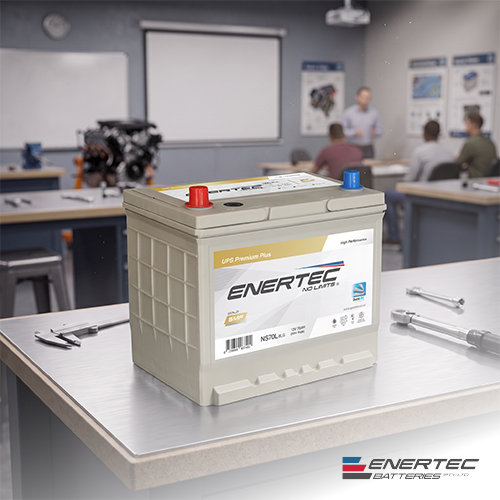
This is where Enertec’s broader product range becomes valuable. Trade teams can explore the Enertec product range and match battery options according to application, brand and technology rather than relying on memory or guesswork.
Application accuracy for each trade audience
Battery specialists and retail chains
Battery specialists are trusted for fast, accurate recommendations. Application accuracy helps protect that trust. Staff should be trained to ask for exact vehicle details, check technology requirements and explain why the cheapest battery may not be the correct one.
Fitment centres, tyre chains and service networks
These businesses often see customers during routine service, tyre replacement or battery testing. Accurate fitment gives service advisors a stronger value conversation and helps reduce repeat branch visits for the same battery complaint.
Auto spares retailers and parts distributors
Parts distributors need to protect workshops from wrong supply. Strong application guidance, clear SKU mapping and support from a trusted supplier can reduce returns and improve trade confidence.
OEM dealerships and dealer groups
Dealer groups manage new vehicles, used vehicles, service departments and handovers. Accurate battery fitment supports vehicle readiness and helps avoid customer dissatisfaction after delivery or service.
Auto electrical workshops and repair specialists
Auto electrical teams need to diagnose the full system. If the wrong battery has been fitted, they may be the ones who uncover the problem. Application accuracy helps them recommend with technical authority.
How to build a better fitment process
A reliable fitment process does not need to be complicated. It needs to be consistent.
Start by identifying the vehicle correctly. Confirm the battery currently fitted. Check whether the vehicle needs flooded, EFB or AGM technology. Test the existing battery and charging system. Inspect terminals, cables and hold-down points. Then match the replacement based on specification, not only price.
When the correct battery is selected, explain the reason to the customer. A simple explanation builds confidence.
You can say:
Your vehicle needs this battery because the technology and specification match the application, not only because it fits in the tray.
That one sentence helps move the conversation away from price alone.
Why choose Enertec for application-led supply
Enertec supports trade businesses with a wide battery offering that helps dealers, workshops and distributors match products to real applications. For new Asian vehicle models, this matters because the aftermarket needs range depth, technical clarity and supplier support.
A fitment business needs access to the right battery. A parts distributor needs stock confidence. A dealership needs reduced handover risk. A workshop needs technical support when the vehicle does not behave as expected.
Enertec helps the trade build stronger battery conversations around application fit, technology match and long-term value.
To discuss supply, fitment support or product range guidance, contact Enertec. To strengthen your battery offering with a trusted supplier, become an Enertec dealer.
The right fitment protects the sale
Automotive battery fitment for new Asian vehicle models is no longer a quick size match. It is a technical and commercial decision that affects vehicle performance, customer trust and business profitability.
The right battery must match the vehicle’s technology, specification and usage. When trade teams get this right, they reduce comebacks, protect warranty confidence and build stronger customer relationships.
For battery specialists, fitment centres, parts distributors, dealerships and workshops, application accuracy is now one of the clearest ways to stand out.
Help your customers leave with the right battery the first time. Partner with Enertec for application-led battery supply, product range support and smarter fitment confidence.