.png)
2026-03-25 18:41:52
Different Battery Technologies Explained: Lead to Lithium
A Practical Guide for Dealers, Workshops and Industrial Power Professionals
In today’s energy-driven economy, understanding battery technology is no longer optional; it is commercially critical.
Modern vehicles, backup systems, renewable installations and industrial equipment place vastly different demands on batteries. Selecting the wrong chemistry does not just cause inconvenience, it leads to premature failure, warranty claims, reputational damage and lost customer trust.
For dealers, workshops and power solution providers, knowing the difference between battery technologies is the difference between a once-off sale and a long-term client.
As a specialist distributor of world-class energy brands, Enertec ensures our partners are equipped not only with the right stock but with the right technical insight.
Below is a practical breakdown of the most commercially relevant battery technologies used across automotive, leisure, backup and industrial applications.
Battery Technologies Explained
1. Traditional Flooded Lead-Acid (Wet Cell)
The foundation of modern battery technology.
Flooded lead-acid batteries consist of lead plates submerged in a liquid electrolyte (sulphuric acid and water). They have powered internal combustion vehicles for over a century.
How It Works
During discharge, lead sulfate forms on the plates. During charging, this chemical reaction reverses, restoring energy capacity.
Advantages
● Lowest upfront cost
● Proven and widely understood technology
● Strong cold cranking performance
Limitations
● Might Requires maintenance (water top-up) if not the sealed maintenance free type
● Must remain upright
● Sensitive to vibration
● Shorter cycle life when deeply discharged
Primary Applications
● Older passenger vehicles
● Agricultural equipment
● Budget automotive replacements
● Large stationary backup banks where cost-per-kWh is key
For dealers, flooded batteries offer entry-level pricing but require correct customer education to avoid premature sulfation-related failures.
2. Calcium / SMF (Sealed Maintenance-Free) Lead-Acid
Often referred to simply as “Calcium batteries,” this is an evolution of traditional flooded technology.
Instead of antimony alloys, calcium alloy is used in the plate grids. This significantly reduces water loss and lowers self-discharge.
Although internally flooded, these units are sealed and do not require routine topping up under normal conditions.
Advantages
● Lower maintenance
● Reduced water loss
● Longer shelf life
● Improved resistance to overcharging compared to traditional flooded
Primary Applications
● Modern passenger vehicles (non-start-stop)
● Light commercial vehicles
● High-volume automotive retail environments
Dealer Insight
Calcium/SMF batteries dominate much of the South African replacement market. They balance affordability and reliability, making them ideal for price-sensitive segments.
However, the charging voltage must be correct. Incorrect alternator output or poor charging practices can still reduce lifespan.
3. Enhanced Flooded Battery (EFB)
EFB technology was developed to support entry-level Start-Stop vehicles.
These batteries include a polyester scrim material on the positive plate surface, helping stabilise active material during frequent engine restarts.
Advantages
● Higher cyclic durability than standard flooded
● Improved partial state-of-charge performance
● Better resistance to repeated start cycles
Primary Applications
● Entry-level Start-Stop vehicles (without regenerative braking)
● Marine and dual-purpose leisure use
Critical Warning for Dealers
An EFB must never be downgraded to a standard flooded battery in a Start-Stop vehicle. This is a common cause of early failure and warranty returns.
Correct application matching protects your reputation.
4. AGM (Absorbent Glass Mat)
AGM is widely regarded as the premium lead-acid solution for high-performance applications.
Instead of free-flowing electrolyte, AGM batteries use compressed fibreglass mats to absorb and immobilise the acid. They are Valve Regulated Lead-Acid (VRLA) batteries and are completely sealed.
Why AGM Outperforms
● High vibration resistance
● Spill-proof and maintenance-free
● Faster recharge acceptance
● Excellent deep-cycle capability
● Lower internal resistance
Primary Applications
● Premium Start-Stop vehicles (with regenerative braking)
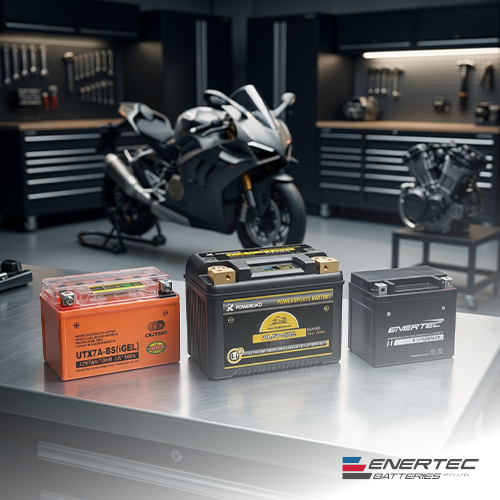
● Motorcycles and powersports
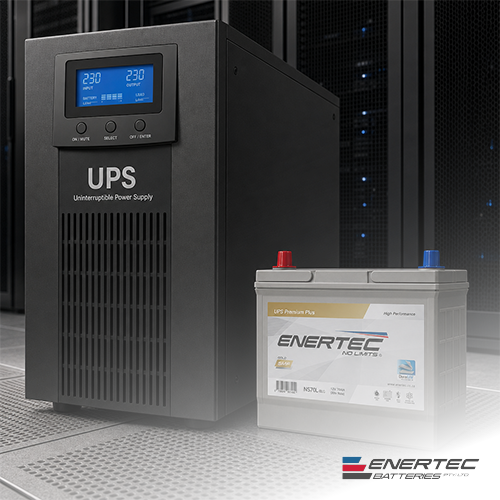
● UPS systems
● Marine and off-road
● High-electrical-demand vehicles
Dealer Risk Factor
Installing a standard battery where AGM is required will lead to premature failure. AGM systems are designed to handle aggressive charging cycles and heavy accessory loads.
For workshops, AGM represents both a higher margin and higher responsibility.
5. Gel Battery Technology
Gel batteries are also VRLA but use silica to transform the electrolyte into a thick gel.
Unlike AGM, which is optimised for high discharge bursts, Gel batteries excel in deep, slow discharge cycles.
Advantages
● Exceptional deep-cycle recovery
● Strong performance in high ambient temperatures
● Lower risk of electrolyte stratification
Primary Applications
● Solar installations
● Wind energy systems
● Mobility equipment
● Industrial backup banks
Gel batteries are highly application-specific. Incorrect charging settings can damage them, making compatible charging equipment essential.
6. Lithium-Ion Phosphate (LiFePO₄)
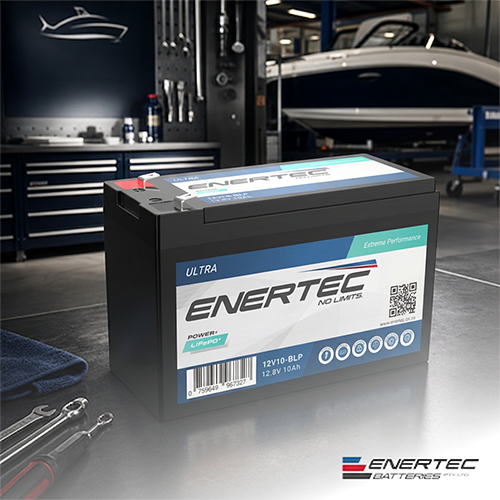
Lithium represents a significant leap in battery technology, with LiFePO₄ being the safest and most stable lithium chemistry currently used in automotive and leisure markets.
While the initial cost is higher, the total cost of ownership is often significantly lower.
Key Performance Benefits
● 50–70% lighter than lead-acid
● 2,000–5,000+ cycle life
● Deep discharge capability (up to 90–100%)
● Rapid charging
● Extremely low self-discharge
Each lithium battery includes a Battery Management System (BMS) that protects against overcharge, over-discharge and temperature extremes.
Primary Applications
● High-end caravans and overlanding
● Marine systems
● Off-grid solar
● Performance and racing
● Portable power systems
Dealer Opportunity
Lithium provides strong margin potential, but correct system design and compatible charging infrastructure are essential.
7. Sodium Battery Technology (Emerging Chemistry)
Sodium-ion technology is an emerging alternative to lithium.
Instead of lithium ions, sodium ions act as the charge carrier. Sodium is more abundant and widely available globally, reducing supply chain risk.
Characteristics
● Lower energy density than lithium (currently)
● Promising low-temperature performance
● Reduced reliance on scarce materials
Current Applications
● Utility-scale storage
● Grid stabilisation
● Renewable energy pilot projects
Sodium batteries are not yet mainstream in automotive or small-scale backup markets. However, awareness of this technology positions dealers and distributors for future industry shifts.
Enertec continuously monitors advancements in battery chemistry to ensure our dealer network remains ahead of market evolution.
Maintenance: The Universal Rule Across All Technologies
Regardless of chemistry, batteries fail for the same fundamental reasons:
● Chronic undercharging
● Heat exposure
● Deep discharge neglect
● Incorrect application matching
Sulfation affects all lead-acid variants. Heat accelerates degradation across all chemistries. Improper charging damages even lithium systems.
Integrating smart charging solutions, such as CTEK professional chargers available through Enertec, significantly reduces warranty claims and extends product lifespan.
Summary Comparison of the Major Battery Technologies
|
Technology |
Maintenance |
Vibration Resistance |
Deep Cycle Strength |
Cost Level |
Ideal Use Case |
|
Flooded |
High |
Low |
Moderate |
Low |
Older vehicles |
|
Calcium / SMF |
Low |
Moderate |
Moderate |
Low–Mid |
Modern standard cars |
|
EFB |
None |
Moderate |
Good |
Mid |
Entry Start-Stop |
|
AGM |
None |
High |
Excellent |
High |
Premium vehicles / UPS |
|
Gel |
None |
Moderate |
Superior |
High |
Solar / Industrial |
|
Lithium (LiFePO₄) |
BMS-managed |
High |
Extreme |
Premium |
Off-grid / High-end |
|
Sodium (Emerging) |
Minimal |
TBD |
Developing |
Developing |
Grid-scale future |
The Dealer’s Strategic Decision
Selling batteries today requires more than matching physical size and CCA.
It requires understanding:
● Vehicle charging systems
● Cycling requirements
● Environmental conditions
● Margin protection
● Warranty risk
Choosing the wrong technology damages both the battery and the brand.
Conclusion: Powering Your Business with the Right Partner
Battery technology is evolving rapidly. The transition from flooded to AGM, from AGM to lithium, and now toward emerging sodium solutions reflects a market demanding greater efficiency, reliability and sustainability.
For dealers, workshops and industrial power providers, staying informed is a competitive advantage.
Enertec is more than a battery supplier.
We are a specialist energy distributor committed to:
● Technical vetting for South African conditions
● Comprehensive multi-chemistry inventory
● Professional support and training
● Access to intelligent charging solutions
● Long-term partnership and supply reliability
When you partner with Enertec, you do not just sell batteries; you sell confidence, backed by expertise.
Ready to strengthen your product offering and reduce warranty risk?
Explore the full Enertec range or contact our team to discuss how we can power your business growth.